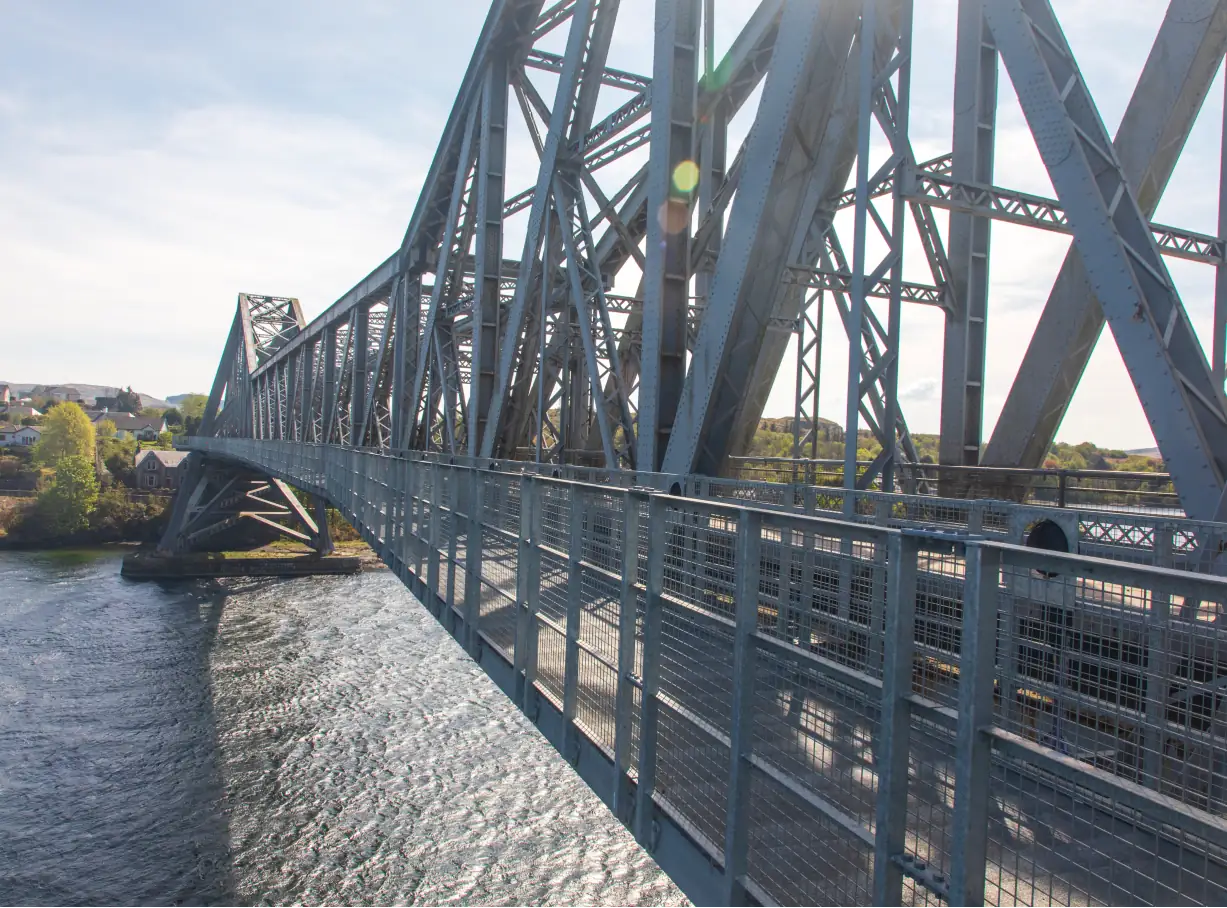
Spencer Bridge Engineering were appointed to design, construct and install a temporary 240m walkway for the Grade B listed Connel Bridge which spans Loch Etive at Connel in Scotland. Commencing in January 2022, the project included a proposal for the walkway which eliminated rivet removal and welding, so the walkway could be removed in the future without impacting the heritage of the structure. The design and build project was completed for BEAR Scotland on behalf of Transport Scotland, resulting in Spencer Bridge Engineering receiving the 2024 Galvanizing in Engineering Award from the Galvanizers association.


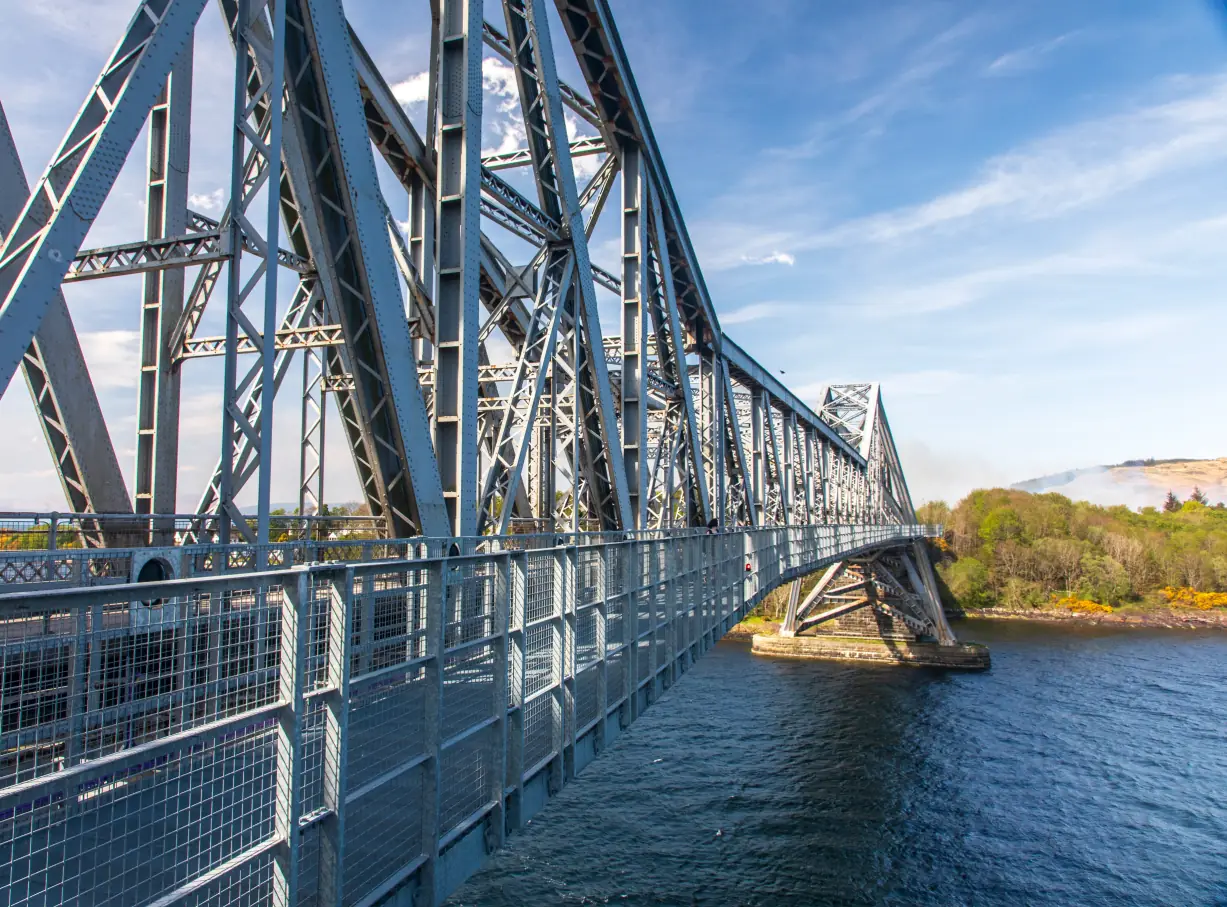
Built in 1903, Connel Bridge was the second largest cantilever bridge in Europe at the time and was originally built as a railway bridge. This was then used for both rail and road traffic from 1914, until the railway closed in 1966. Due to the bridge’s historic significance and its Grade B listed status, the walkway design required significant innovation to protect the structure’s heritage.
The project involved the design, construction, and installation of a 240-metre-long walkway along the full length of the bridge comprised of over 1,000 components, each of which were “hot dip” galvanized. This process provided practical benefits including durability and corrosion resistance, as well as creating a finish that was consistent with the existing 120-year-old structure. Due to the age of the bridge and the construction methods used at the time, the bridge was held together by thousands of rivets.
Part of the proposal for the walkway was to eliminate rivet removal and welding so the walkway could be removed in the future without impacting the heritage of the structure.



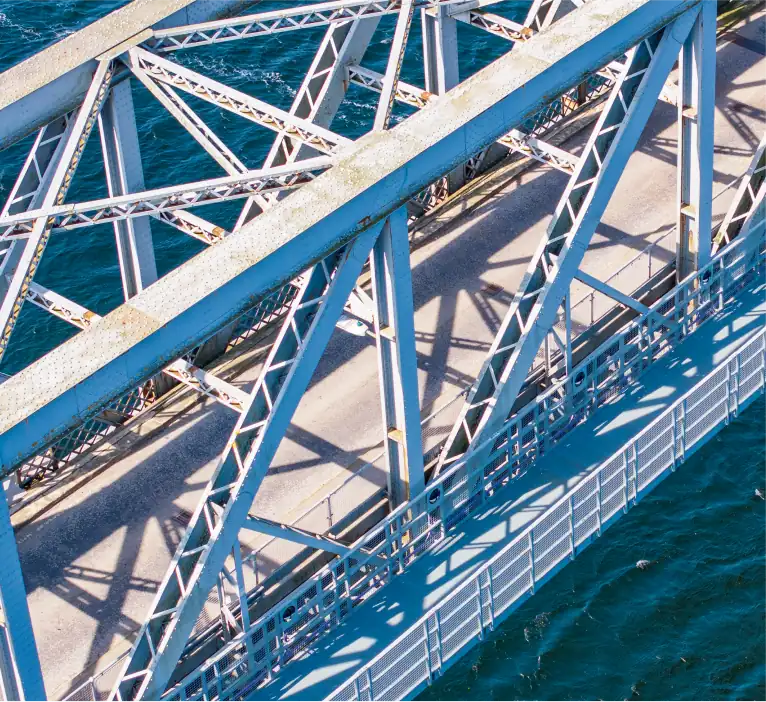
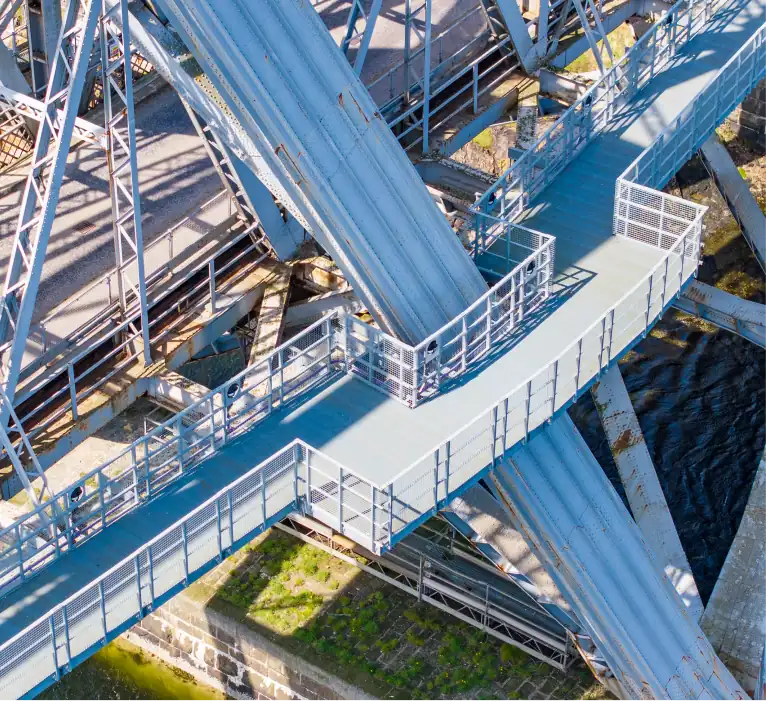
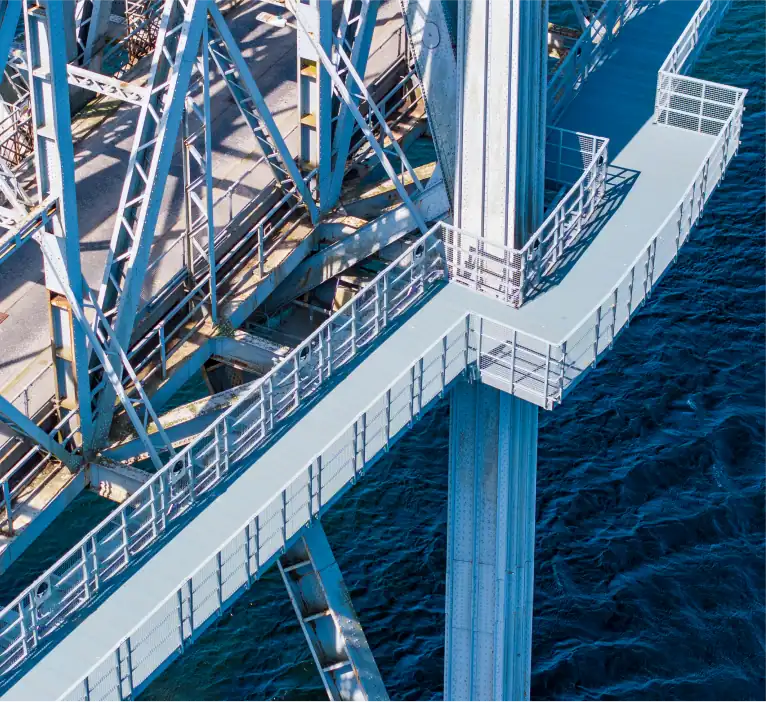
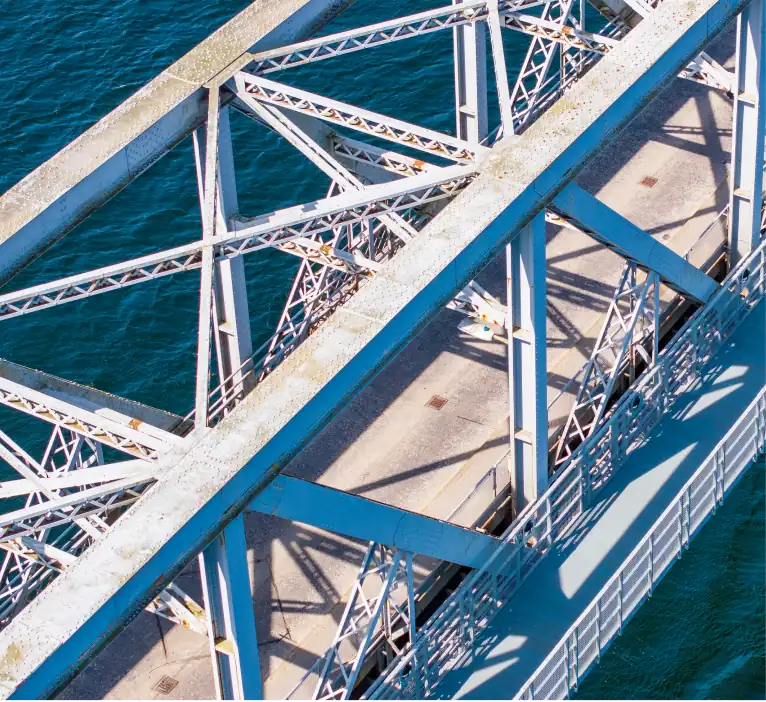


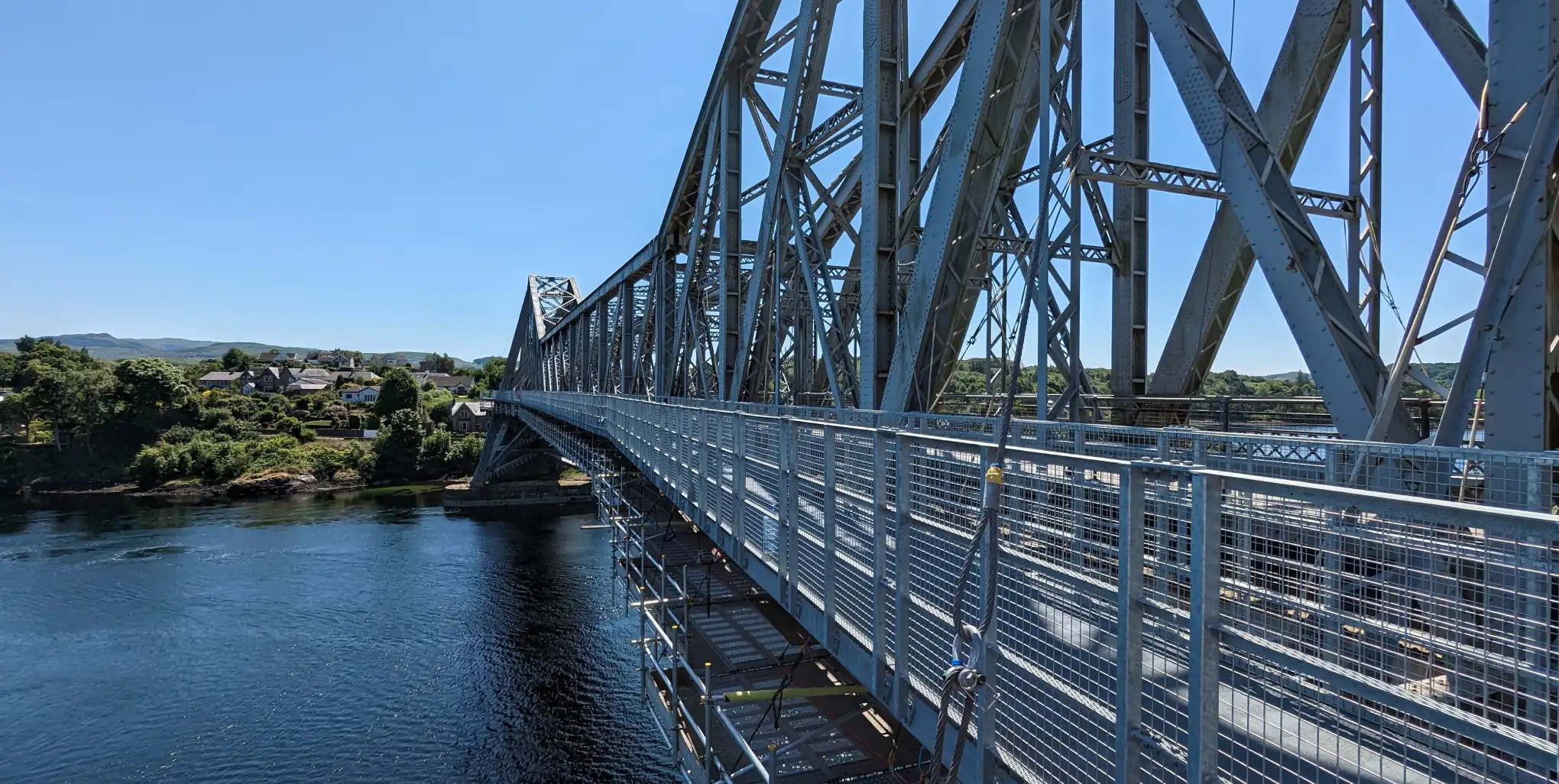
The project was part of the first phase of critical enabling works and began with carrying out surveys including a laser scan and 3D modelling of the bridge to capture its geometry and enable Spencer Bridge Engineering’s in-house design team to design the walkway.
The company’s in-house mechanical and electrical experts also delivered integrated street lighting to illuminate the walkway at night. The walkway was cantilevered off the east side of the bridge, up to 4.5 metres around the lower legs, negotiating the complex shape of the structure and allowing pedestrian access throughout planned works to replace the entire deck over the coming years.
As a result of the successful project, Spencer Bridge Engineering received the 2024 Galvanizing in Engineering Award from the Galvanizers Association for their outstanding interpretation of what galvanized steel can offer the built environment.