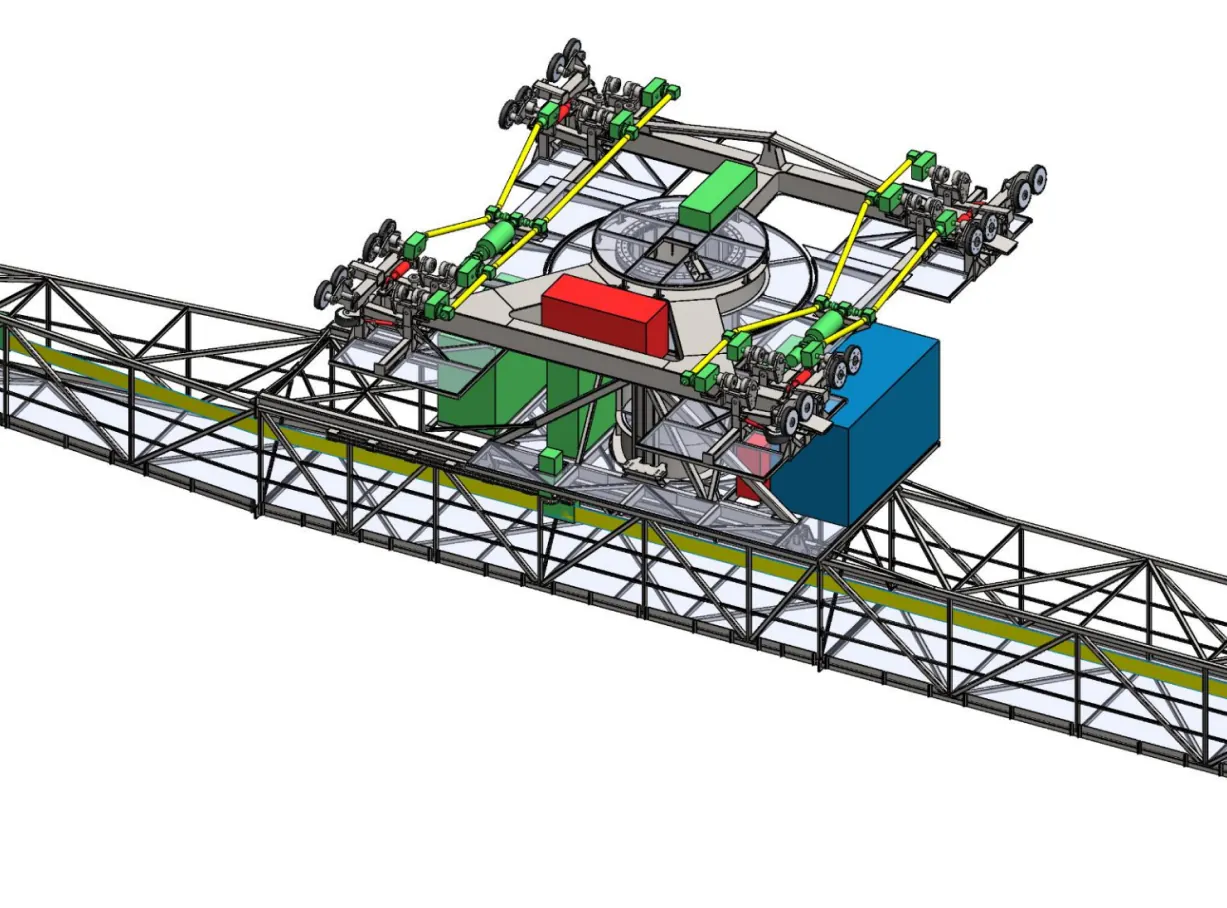
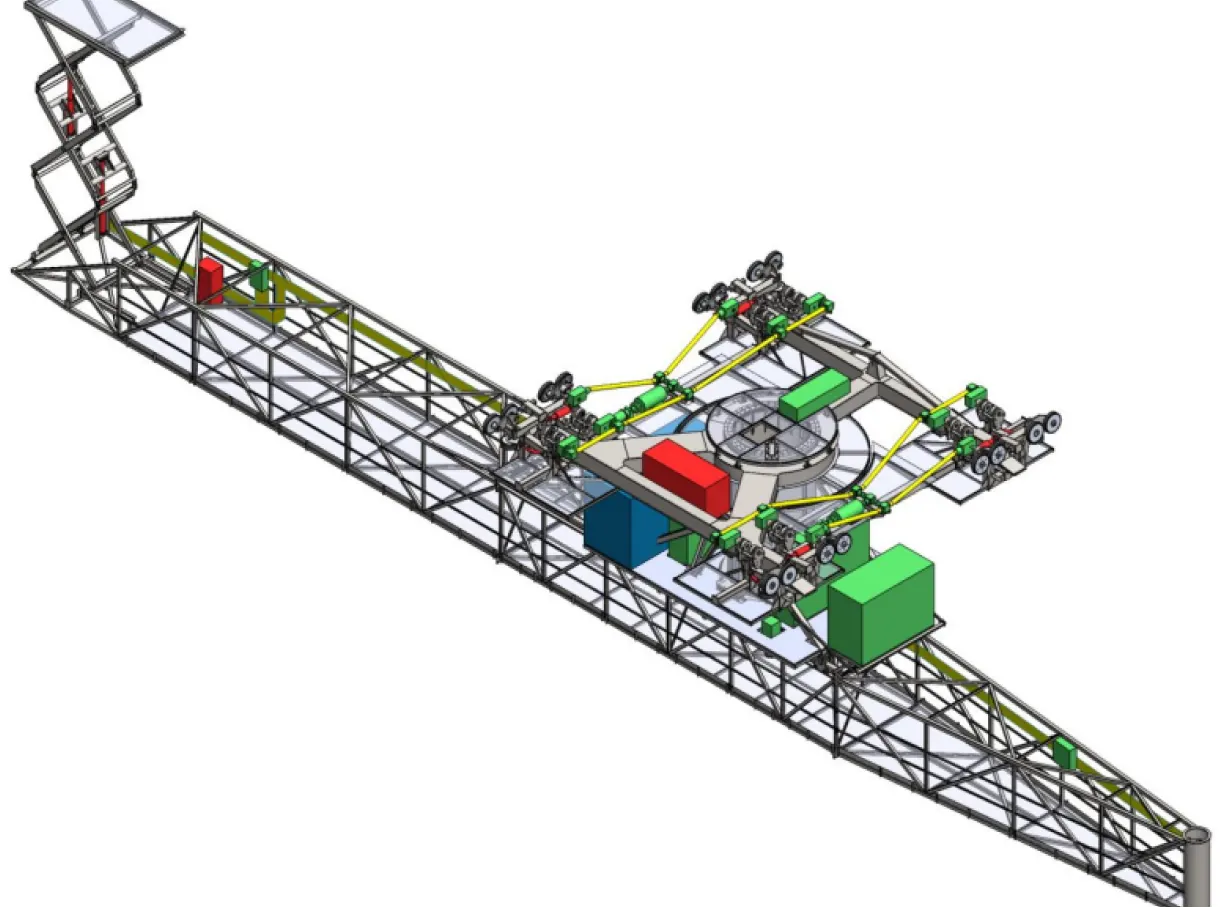
The existing under-deck gantry on the Prince of Wales Bridge had reached the end of its design life, having being commissioned when the bridge was constructed in 1999. Spencer Bridge Engineering were appointed by Amey, on behalf of National Highways (NH) to undertake Desktop Study, Inspection for Assessment (IfA) and Assessment of the gantry installation and the Design Manual for Roads and Bridges (DMRB). The gantry arrangement is a complex structural/mechanical machine, housing a scissor lift on the end of a cantilevered trussed platform.
The first part of the scope was to undertake a desktop study, including a review of all the historic drawings, inspection reports and recorded refurbishment works. From this exercise, an understanding of the structure and its history was developed, such to inform the subsequent IfA and assessment scope.
An Approval in Principle (AiP) was required for approval by NH as the Technical Approval Authority (TAA), detailing methods of analysis for the assessment work and any assumptions made. In preparation for the assessment, an IfA was required to obtain the as-built information of the gantry as well as the current condition of its structures, which needed to be accounted for within the assessment. The IfA was undertaken in-line with the guidance provided in CS454.
The final part of the scope was the assessment. This was undertaken in several stages in an attempt to determine the as-built self-weight of gantry, the deflection of the gantry truss under different loading conditions and the remaining fatigue life of the gantry structures.

The desktop study was a critical piece of work which allowed a thorough understanding of the gantry structure and mechanics. The learnings from the desktop study were used to focus inspection efforts, such that only the critical areas were studied in the subsequent IfA.
The IfA saw the completion of a thorough condition survey of the existing gantry. This included reconciling the construction drawings against the as-built form of the gantry, ultrasonic testing to determine member thicknesses and magnetic particle inspections to determine the presence of any cracks to critical weld details. Any noteworthy defects were recoded against their severity, extent and priority.
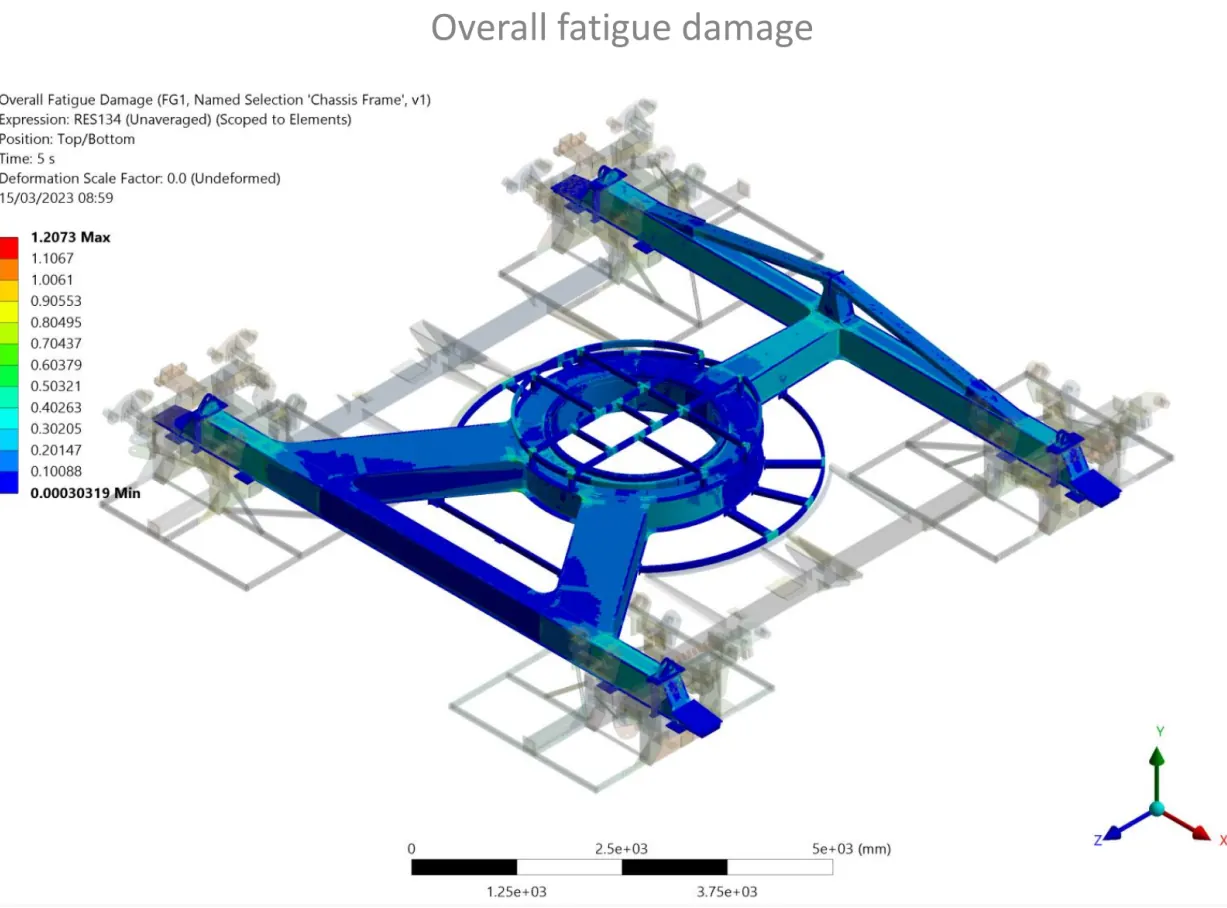
The assessment works included developing a detailed 3D model of the gantry and all the onboard equipment. This was used to determine the theoretical self-weight of gantry. A complex FEA model was developed to allow a fatigue life assessment to be undertaken in accordance with BS EN 13001. Given the modes of articulation made possible by the gantry’s on-board hydraulics and drive motors, several gantry configurations had to be evaluated to understand the resulting fatigue damage occurred since its installation.